March 2026
Gates Foundation grant for antibiotic discovery in Klebsiella
Yves Brun, together with several members of the PandemicStop-AI consortium, will join forces on the project ML-driven small molecule design of Klebsiella-specific antibiotics, which has received US$3.8 million in funding from the Gates Foundation (over 3 years). The team will tackle antimicrobial resistance in Klebsiella pneumoniae, a critical-priority pathogen responsible for nearly 20% of global deaths linked to AMR. Their efforts will contribute to a new international consortium, Gram-Negative Antibiotic Discovery Innovator (Gr-ADI), established by the Gates Foundation, Novo Nordisk Foundation and Wellcome, to accelerate discovery of the next-generation of antibiotics.
Benefiting from expertise and platforms in microbiology, AI, drug discovery, and medicinal chemistry, the project will explore new chemical spaces to design novel antimicrobials effective against Klebsiella, some strains of which resist all known antibiotics. Researchers will generate detailed cellular and molecular “fingerprints” of Klebsiella and its subcellular targets to train predictive and generative AI models, which in turn will propose new molecules effective against the bacterium. In parallel, medicinal chemists will synthesize the most promising candidates to test experimentally, enabling active learning loops to improve drug design. Finally, in collaboration with industry partner Simmunome Inc., the team will develop a digital twin of Klebsiella using AI models trained with experimental data, to understand the bacterium’s antibiotic responses and mechanisms of resistance.
The full Gates team includes Yves Brun (University of Montreal), Mike Tyers (The Hospital for Sick Children), Yoshua Bengio (University of Montreal), Anne Marinier (University of Montreal), Michal Koziarski (The Hospital for Sick Children), Alex Hernández-García (University of Montreal), Robert Batey (University of Toronto) as well as industry partner Simmunome Inc.
June 2024
Congrats to Yves, Cécile, and collaborators from Polytechnique Montréal on their grant from the New Frontiers in Research Fund to study bioadhesion!
The project “A Multidimensional Approach to Study Bioadhesin Interactions with Advanced Nanomaterials” brings together advanced materials, microbiology, ecology, and optics to study bacterial colonization of antifouling surfaces. Our goal is to address the critical lack of robust measurements of the interactions between microbes and substrates at the nanoscale by building an assay for quantitative comparisons under well-defined conditions. We will design and test our approach using the bacterium Caulobacter crescentus, a key culprit in aquatic biofouling.
Microbial biofouling has enormous ecological, environmental, economic, and health impacts for Canadians. Biofilms decrease the effectiveness of antimicrobial therapeutics, and biofouling of ship hulls is a major source of species contamination and decreased fuel efficiencies. Eradicating biofilms is difficult and expensive, and climate change is projected to accelerate biofilm formation further. Therefore, using antifouling materials to prevent biofilm formation as much as possible is the dominant strategy. Traditional antifouling coatings use slowly ablating materials and leaching biocides to prevent buildup; however, it has become clear that these approaches can cause significant damage to local ecosystems.
Some bioinspired materials with nanoscale topologies have shown impressive antifouling properties and could be the solution. Still, we lack a standardization for making thorough head-to-head comparisons of bacterial colonization on such surfaces that are needed to build our understanding of bioadhesives and gain predictive power for designing new materials. Specifically, quantitative measurements are needed on the scale of cells and material features. To do so, we will deploy quantitative force spectroscopy methods, namely Atomic Force Microscopy and optical tweezers, to probe the variability of biological systems in a defined and multidimensional matrix of conditions (temperature, pH, organic load, etc.). We will use bacteria that evolved their adhesins to attach to different surfaces under different environmental conditions and establish a set of standardized conditions and quantitative metrics that we and others can deploy to test a variety of cell types, including pathogenic bacteria, nanomaterials, and conditions. These, in turn, will be used for the next phase of our research: rationally designing new materials that combat the dire problem of biofouling by merging the optimization process for obtaining desirable material properties with the characterization.
For the press release about this award from Polytechnique Montréal, read here.
May 2024
Yves and his collaborators receive $21 million in funding for antibiotic drug discovery
Congrats to Pr. Yves Brun and his collaborators who were awarded $21 million over 4 years to develop a rapid response, active learning-enhanced pipeline for antibiotic drug discovery. This collaboration between 15 scientific teams from across 8 academic institutions and 12 public and private partners combines approaches from microbiology, artificial intelligence, drug discovery, pharmacology, and chemistry to redefine our approaches to identifying new antibiotics, to overcome rising antibiotic resistance among bacteria.
Read the press release from the University of Montreal in French or in English.
To learn more about the project, you can also read about it on our website.
We thank the Canada Biomedical Research Fund and the Biosciences Research Infrastructure Fund (CBRF-BRIF) for their support of this research initiative.
June 2023
Congrats to Yves on receiving the silver 2023 CCAE prix d’Excellence award
Congrats to Pr. Yves Brun on receiving the silver 2023 of The Canadian Council for the Advancement of Education (CCAE) in Category 3, for the best special event: La poésie des bactéries: immersion dans l’infiniment petit
July 2022
Congrats to Emma on her award of a Bourse de mérite from the Faculté de médecine!
June 2022
Hooray! Our proposal “Discovery of antimicrobials targeting outer membrane biogenesis and permeability by artificial intelligence-driven high throughput microscopy” was funded by FRQ!
Yves awarded Order of Merit by his alma mater, Université de Moncton
Université de Moncton: Ordre du mérite 2022 de L’alUMni
Université de Montreal: Yves Brun reçoit un prix d’excellence de l’Université de Moncton
May 2022
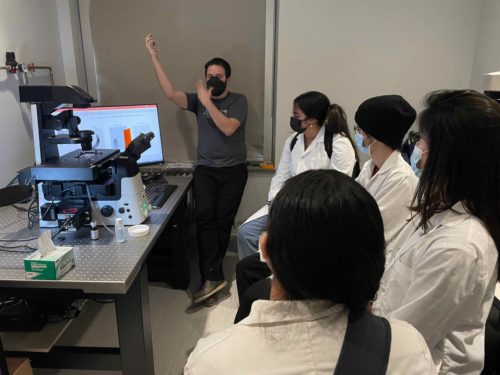
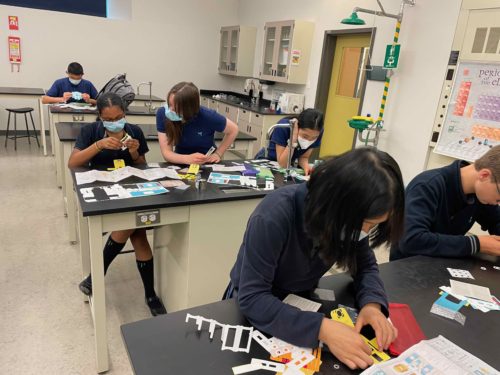
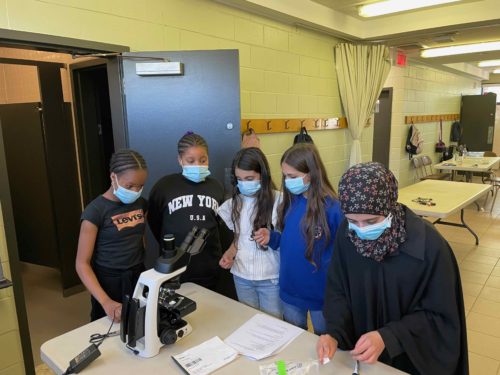
Lab members have been busy with lots of school outreach activities at the end of the academic year!

Cegep students touring the lab with Max. 
Building folding paper microscopes (Foldscopes) at École Villa Maria with Emma Visualizing bacteria with Farah and Marie at Les Scientifines. 
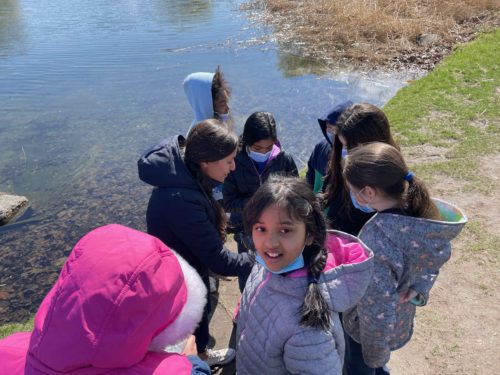
Collecting microbial water samples Vaidehi and Kelley at Jarry Park with Sinclair Elementary School 3rd and 4th graders. 
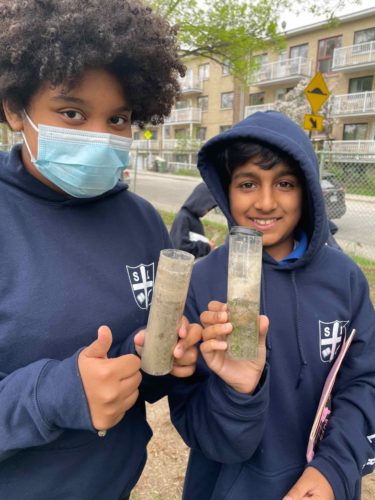
Sinclair Laird 5th and 6ths graders show off microbial mud cultures in their Winogradsky columns. Antibiotics and AMR at an AI conference: Yves presents to a new crowd.

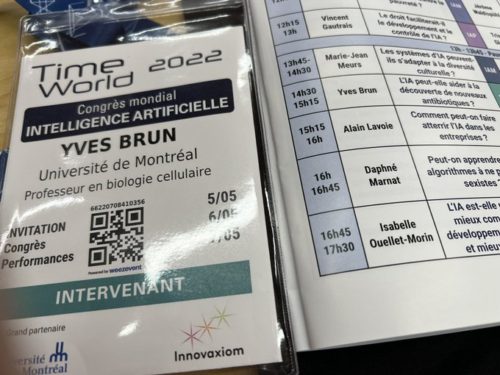
L’IA peut-elle aider à la découverte de nouveaux antibiotiques?: Congrés mondial Intelligence Artificielle
April 2022
Ces bactéries qui émerveillent: Le Devoir a présenté le spectacle dans la SATosphere
Ces bactéries qui émerveillent: Quand on porte attention à la diversité de leurs formes, fonctions, aptitudes et bienfaits, la peur se mue vite en éblouissement.

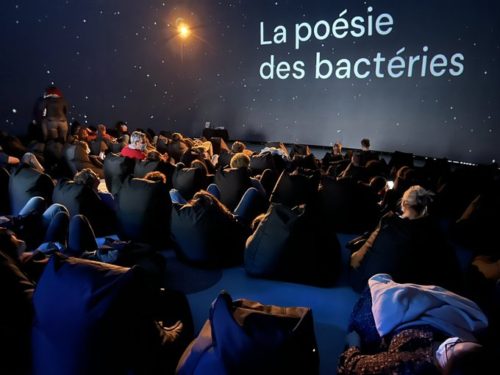
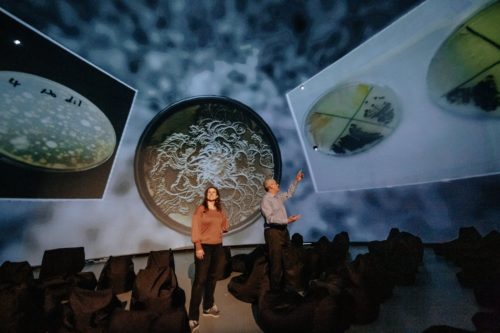
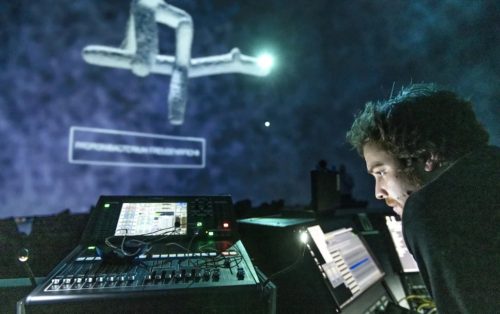
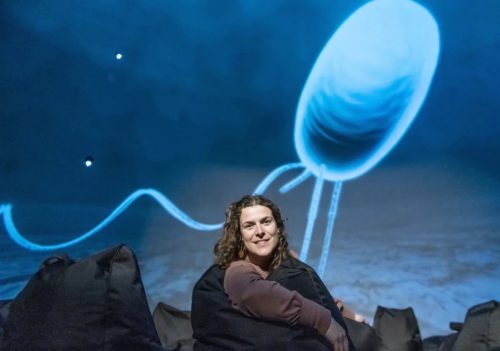
« La poésie des bactéries : Immersion dans l’infiniment petit » Conférence a la Sociéte des arts technologiques (SAT)
Link vers plus d’info sur la SATosphère !
Watch the teaser video here


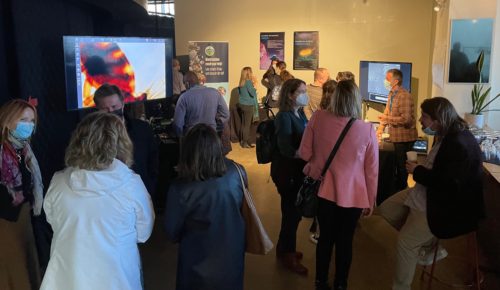
Audience awaits the show in the SATosphere. 
Yves rehearses with director Mireille Camier. 
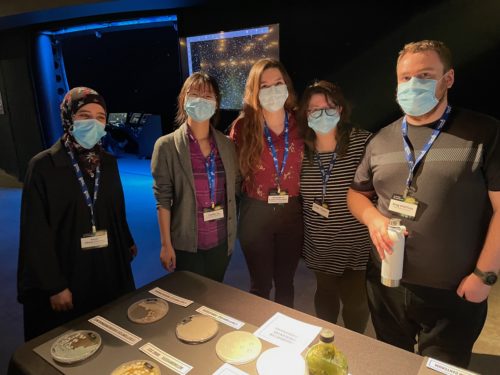
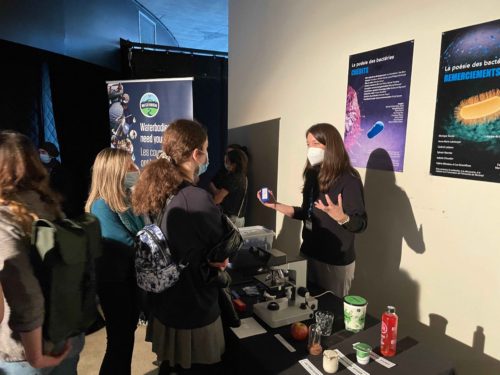
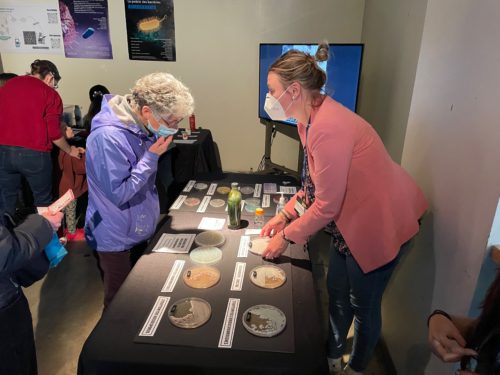
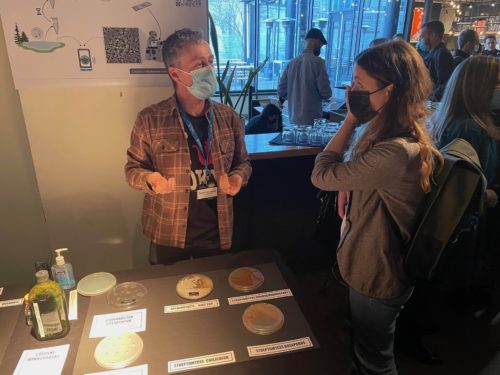
Lab members and microbiology students share their love of bacteria at displays outside the SATosphere. Laura from Water Rangers explains the participatory science project to test and collect water samples for antibiotic resistant bacteria. Marie shows some Petri plate cultures to audience members. 
Invited audience members at the show premiere. 
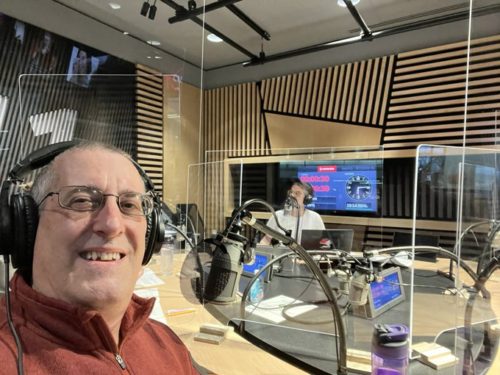
Sebastien explains some microbiology to a curious audience member. Entrevue avec Yves à la Moteur de recherche, Radio-Canada

Aperçu de le conference dans Le Journal de Montreal : Belles grosses bactéries poilues
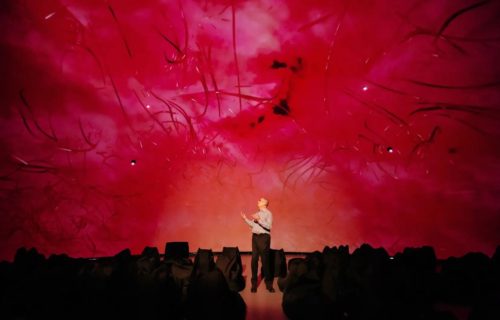
Belles grosses bactéries poilues: Un spectacle combine l’animation 3D façon jeu vidéo et la microbiologie pour projeter des bactéries géantes



March 2022
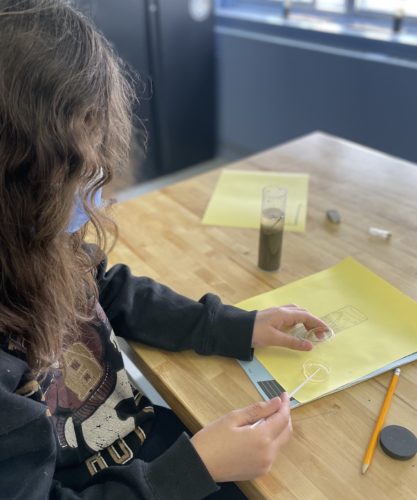
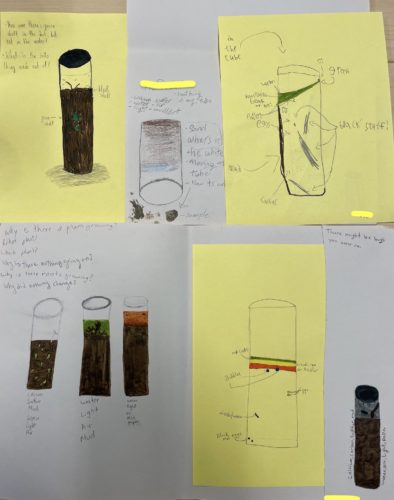
Growing young microbiologists with Winogradsky columns!
Future microbiologists at Sinclair Laird Elementary School cultured microbes from their schoolyard mud and asked lots of great research questions:
- Are microbes making more microbes?
- Do microbes eat? What do they eat?
- Do microbes fight with other microbes?
- Why is there green stuff in the dirt, but not in the water?
- Why are the microbes breathing air?
- Do microbes sleep?
- What would happen if these grew for one year? For 3 years?


February 2022
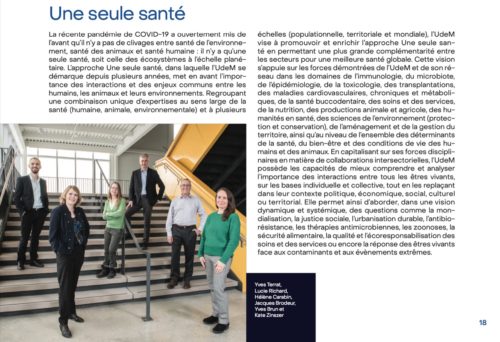
Yves is featured in the new Université de Montreal strategic research plan.
Université de Montreal’s features Yves in the strategic research plan 2022-2027


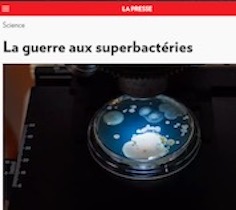
Yves featured in news article: “The war on superbacteria: The next pandemic”
“La guerre aux superbactéries: La prochain pandemie,” La Presse. (8 fevrier 2022)

November 2021
Yves featured as a member of the Royal Society of Canada (in dramatic slow-motion, also starring postdoc Kelley)!
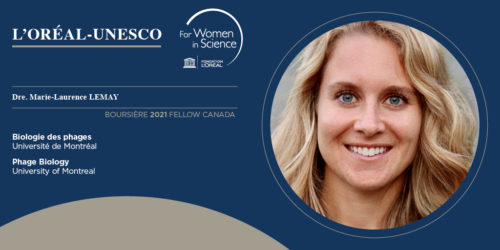
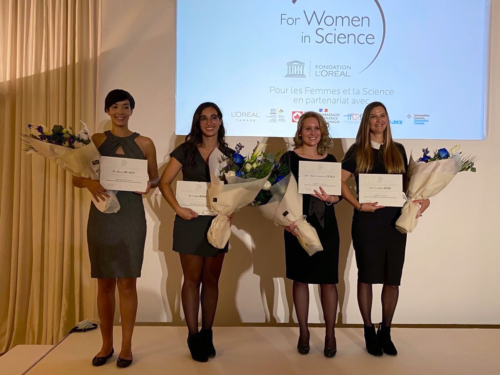
Congrats to postdoc Marie-Laurence Lemay on her award of a L’Oréal-UNESCO 2021 Excellence in Research Fellowship!


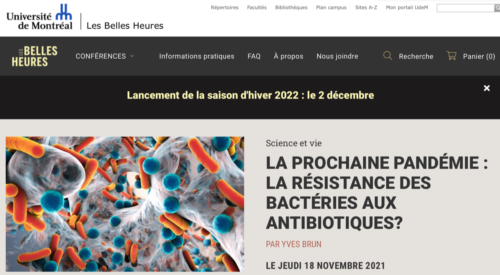
Yves’ gives a public talk on antibiotic resistance in “Les Belles Heures”

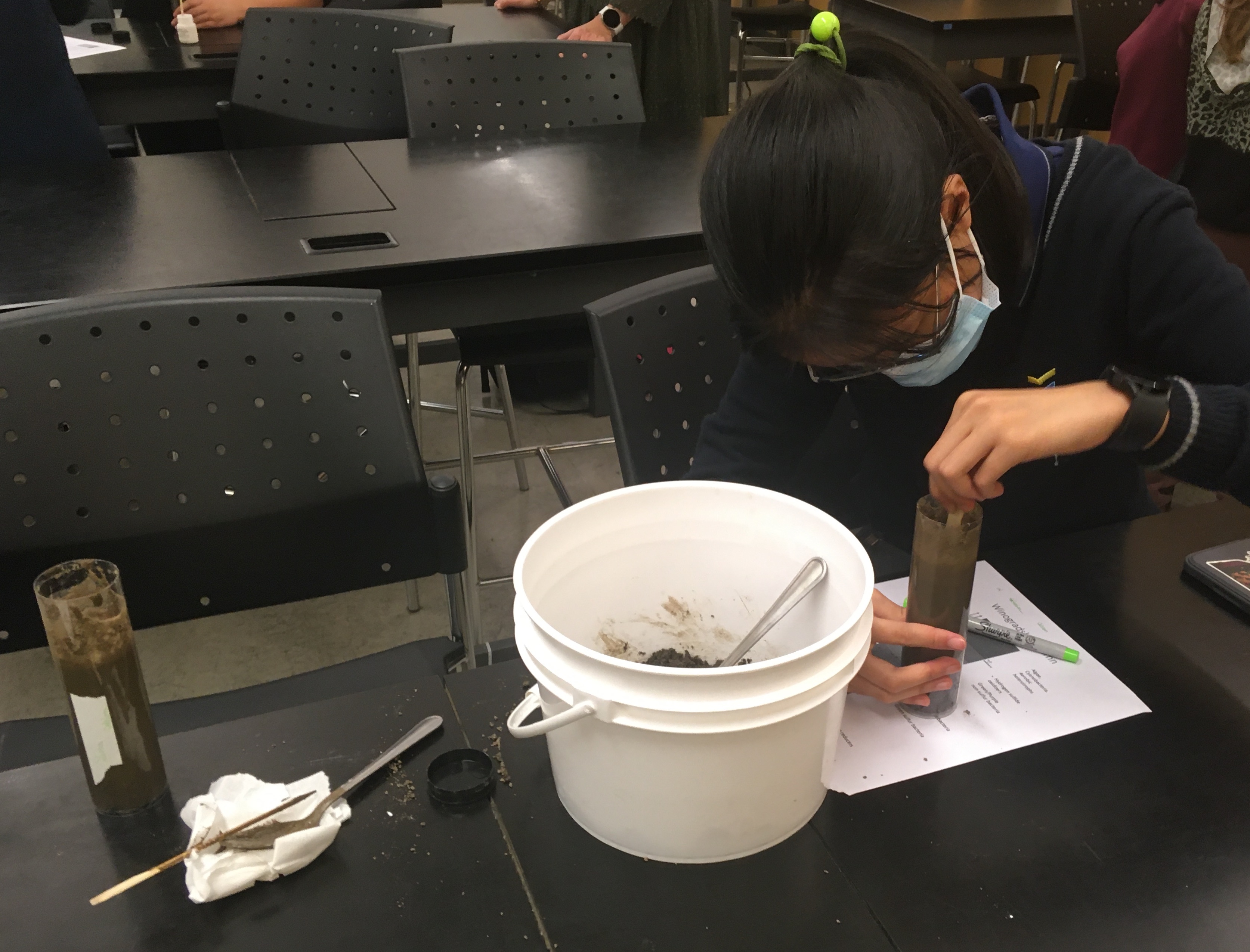
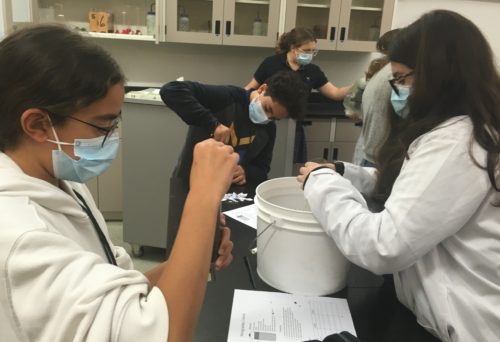
Outreach event to build Winogradsky columns with Biology Club at École Villa Maria.


October 2021
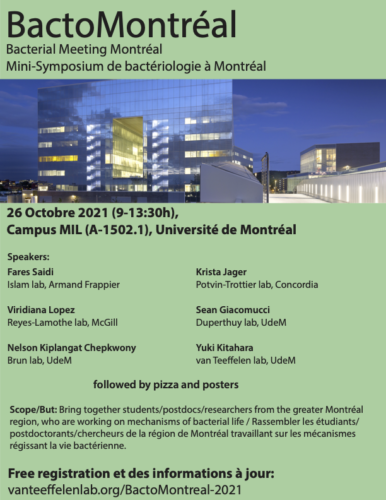
Post-doc Nelson Chepkwony’s recent work on holdfast adhesion shared at BactoMontréal conference and featured by UdeM news.
UdeM News: “Nature’s strongest glue now works in wet AND salty environments”
UdeM Nouvelles: “La colle la plus puissante de la nature maintenant efficace en milieu humide ET salé”

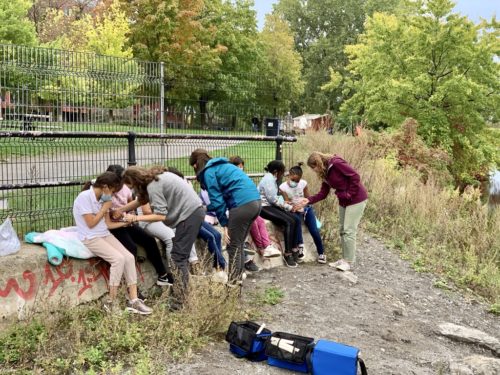
Brun lab volunteers work with Les Scientifines to collect water samples
A beautiful day testing water quality and collecting samples at the Lachine Canal with Water Rangers and the young scientists of Les Scientifines, with Brun Lab members Kelley, Farah and Marie-Laurence
.

September 2021
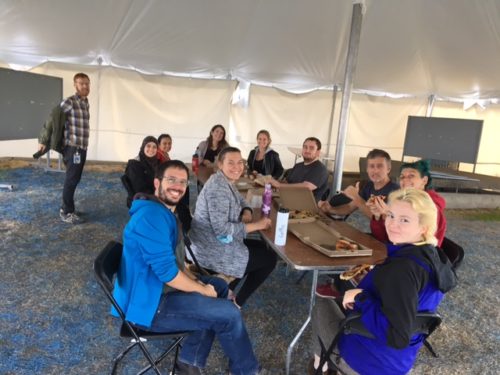
Pizza break from annual lab cleaning day!

Yves elected as a Fellow to the Royal Society of Canada!
Admission to the RSC is an honour that recognizes the excellence and contributions of >100 researchers Yves has had the privilege of welcoming to the lab over ~30 years and who share his passion for understanding the basic mechanisms of bacterial function. See more from UdeM Nouvelles.
July 2021
Félicitations à la doctorante Farah pour avoir reçu une bourse de Mérite de la Faculté de médecine!
June 2021
Congrats to Yves and Dave on a major grant from Génome Québec’s Genomics Integration Program!
Microbiologist Yves Brun has received a major grant from Génome Québec’s Genomics Integration Program to test an innovative approach that could lead to the discovery of new antibiotics.
UdeM Nouvelles : “Unir l’intelligence artificielle à la microscopie pour lutter contre l’antibiorésistance”
UdeM News : “Fighting antibiotic resistance with the power of automated microscopy and AI“
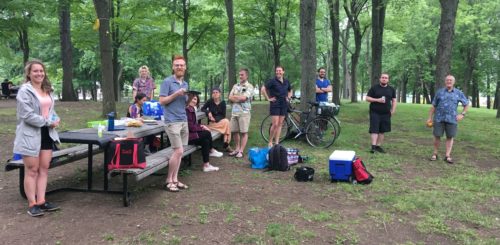
First lab get-together in 2021: potluck picnic at Parc Mt. Royal!

As Canada 150 Research Chair, Yves presents to the CERC/C150 Virtual Symposium
Link to video presentation: Dr. Yves Brun, C150 in Bacterial Cell Biology
May 2021
Congrats to Cécile, Max, Marie, Marie-Laurence, and Sébastien for organizing the very successful BiSP meeting for bacteriology in Québec!

Congratulations to Marie-Laurence and Greg for their post-doctoral fellowships from FRQNT!
The Fonds de Recherche du Québec – Nature et Technologies awarded Bourses de recherche postdoctorale to Greg Whitfield for his project “Déchiffrer la machinerie biosynthétique du pilus tad bactérien,” and to Marie-Laurence Lemay for her project “Les phages qui infectent les bactéries avec des cycles cellulaires complexes.“